Why Your Biggest Win Just Made You Feel Like the Biggest Fraud

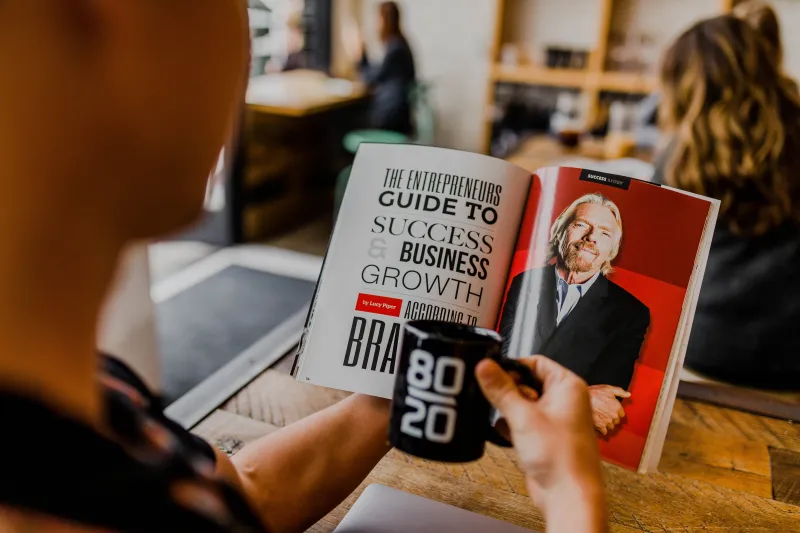
Photo: founder sitting alone looking thoughtful after celebration success, via wallpapers.com
The term sheet landed on a Tuesday afternoon. After eighteen months of pitching, pivoting, and white-knuckling through a market that wanted nothing to do with you, a top-tier VC said yes.
And then, somewhere between the celebratory Slack message and the congratulations dinner, a voice showed up that you didn't invite.
They're going to find out you don't actually know what you're doing.
If you've been here — if the feeling of being exposed seems to intensify exactly when you have the least logical reason to feel that way — you're not alone, and you're not losing your mind. But what's happening to you is worth understanding, because it doesn't just go away on its own.
Imposter Syndrome Isn't One-Size-Fits-All
Imposter syndrome gets talked about like it's a single experience that affects everyone roughly the same way. The popular narrative is that you feel like a fraud until you accumulate enough evidence of competence to quiet the voice down.
For most professionals, that's roughly how it works. The junior lawyer who feels in over her head eventually tries enough cases to build genuine confidence. The new manager who second-guesses every decision eventually leads enough teams to trust his judgment.
Founders don't follow that arc. And the reason is structural, not personal.
When you're building a startup, the goalposts move constantly and by design. Every milestone you reach is immediately reframed as the floor of the next level. Raise a seed round and you're now accountable to a Series A standard. Hit product-market fit and the question immediately becomes whether you can scale it. There is no accumulation of evidence that closes the loop — because the loop is designed to stay open.
This is why validation, for founders, often makes imposter syndrome worse instead of better. The win doesn't shrink the gap between who you are and who you think you need to be. It just raises the stakes on getting caught.
The Specific Anxiety That Follows a Major Milestone
There's a particular flavor of post-win anxiety that's worth naming clearly, because a lot of founders experience it and assume something is wrong with them.
It goes something like this: Before the milestone, the pressure was about achieving. You were chasing something. The anxiety had direction — it was uncomfortable, but it was motivating. After the milestone, the pressure shifts to maintaining. Now you have something to lose. Now people are watching. Now the expectations are explicit in a way they weren't before.
The dopamine hit from the win is real, but it's brief. What lingers is the exposure. More people know your name. More people have opinions about what you should do next. More people are positioned to watch you fail.
For founders who built their identity around being the underdog, around having nothing to lose, this transition is genuinely destabilizing. The scrappy phase had a kind of psychological protection built into it. Nobody expects the underdog to have all the answers. But once you've got the term sheet, the press coverage, the customer logo — suddenly you're supposed to.
Why Reframing Wins Is Harder Than It Sounds
The standard advice for imposter syndrome is to reframe your accomplishments — to practice receiving credit, to remind yourself of what you actually did to get here.
This advice isn't wrong, but it's incomplete for founders. Here's why: most of your wins involved a significant amount of luck, timing, and other people's contributions. You know this because you were there. Trying to claim full ownership of a success you know was partially circumstantial feels dishonest, and founders — who tend to be unusually clear-eyed and self-critical — often reject the reframe because it doesn't hold up under scrutiny.
A more honest approach is to separate two things that usually get conflated: credit and capability.
You don't have to believe you single-handedly caused the win to believe that you're capable of continuing to navigate what comes next. Credit is about the past. Capability is about the future. Imposter syndrome almost always lives in the future — it's not really about whether you deserved the last win, it's about whether you'll be able to handle what the win brings.
When you catch the voice telling you that you're a fraud, try asking it a more specific question: Fraud at what, exactly, and compared to whom? Usually the answer is vague and grandiose — you're supposed to be some impossible, omniscient version of a founder who doesn't exist anywhere. Naming the specific fear makes it smaller.
Building Resilience That Actually Lasts
Dopamine-based confidence — the kind that comes from wins and external validation — has a half-life. It feels good for a moment and then it metabolizes, leaving you back where you started, maybe more anxious than before because now the bar is higher.
Psychological resilience that actually sticks comes from something different: a stable relationship with your own values and process, independent of outcomes.
This sounds abstract, so here's what it looks like practically. It means being able to say, I made the best decision I could with the information I had, and I showed up the way I wanted to show up — regardless of whether the result was a win or a loss. It means your self-assessment is based on who you are in the process, not just on what the scoreboard says.
Therapy is genuinely useful here, not as a place to vent but as a space to build the kind of self-knowledge that doesn't depend on external confirmation. A good therapist will help you identify the specific beliefs driving your imposter experience — beliefs that are often old, pre-startup, and completely unrelated to your actual competence as a founder.
So will community. Not the performative LinkedIn version of founder community, but the real kind — other founders who will tell you they felt exactly the same way after their Series A, and that they survived it, and that the voice doesn't go away but it does get quieter.
The Win Was Real. So Is the Discomfort.
Here's the thing nobody tells you at the celebration dinner: you're allowed to hold both. The win was real. The anxiety is real. You earned the milestone. You're also genuinely uncertain about what comes next. Those things don't cancel each other out.
The founders who navigate this best aren't the ones who've silenced the imposter voice. They're the ones who've learned to move alongside it — to take the next step even when the voice is loud, because they've stopped waiting for it to go away before they act.
You don't have to feel confident to keep going. You just have to know that the discomfort you're feeling isn't a sign that something's wrong.
It's a sign that you're playing at a level that matters to you.