Doing Nothing Feels Like Dying: The Real Reason Founders Can't Switch Off
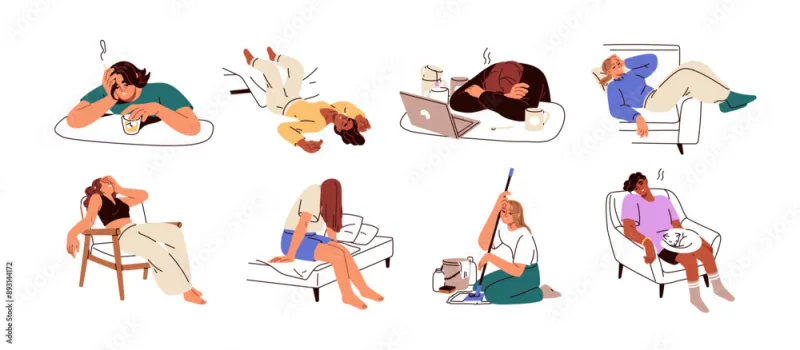
Photo: exhausted entrepreneur sitting quietly on couch staring out window, via as2.ftcdn.net
You finally take a Saturday off. No Slack. No pitch deck tweaks. No "just one quick check" of the dashboard. You sit on the couch with a cup of coffee and — almost immediately — a low-grade panic starts crawling up your chest.
You're not in danger. Nothing is on fire. But your body is acting like it is.
This isn't a productivity problem. It's not even really a discipline problem. It's a psychological one, and it runs a lot deeper than most founders want to admit.
How Hustle Culture Became a Moral System
Somewhere along the way, American startup culture stopped treating hard work as a means to an end and started treating it as the end itself. Gary Vee didn't invent this, but he definitely put it on a t-shirt. The message — work while they sleep, outwork everyone, rest when you're dead — got absorbed not just as business advice but as a value system.
And value systems don't stay in the office. They get internalized.
When productivity becomes a moral virtue, its opposite becomes a moral failing. Rest stops being "recovery" and starts being "laziness." Leisure stops being "human" and starts being "a luxury you haven't earned yet." The guilt you feel on that Saturday couch isn't random — it's the logical output of a belief system you've been marinating in since the day you decided to build something.
The problem is, you probably never consciously signed up for it. It just... happened. Slowly. Through podcast after podcast, LinkedIn post after LinkedIn post, until your nervous system started treating stillness as a symptom of failure.
What's Actually Happening in Your Brain
Here's the clinical piece that most hustle-culture content conveniently skips: chronic high activation has a neurological cost.
When you're operating in founder mode — always on, always scanning for threats and opportunities — your sympathetic nervous system is running the show. Cortisol and adrenaline are doing their thing. That's useful in short bursts. It's what gets you through the brutal funding crunch or the 3am product launch.
But when that state becomes your baseline, your brain starts to read calm as dangerous. Literally. Deactivation — the physiological process of actually relaxing — can trigger a threat response because your nervous system has been trained to associate alertness with safety. The moment you slow down, your brain asks: why did we stop? what did we miss? are we falling behind?
This is sometimes called "vigilance fatigue" — the exhausting paradox of being too tired to rest because resting itself has become a source of anxiety. It's not weakness. It's what happens when a human system gets locked into a mode it was never designed to sustain indefinitely.
The Hidden Costs You're Not Putting in the P&L
Founders are obsessive about measuring what matters. CAC, LTV, burn rate — you track it all. But almost nobody tracks the cost of chronic activation, probably because it doesn't show up on a spreadsheet until it's catastrophic.
Here's what the research actually says: sleep deprivation at the levels common among founders degrades decision-making quality in ways that are nearly invisible to the person experiencing it. You think you're sharp. You're not. Chronic stress compresses your capacity for creative thinking — the exact kind of thinking that early-stage companies depend on. And the emotional regulation required to lead a team, manage investor relationships, and stay resilient through setbacks? That runs on a resource that only gets replenished during genuine downtime.
You are not a machine. And even machines need maintenance windows.
The founder who never rests isn't a hero. They're a liability — to their company, their team, and themselves. The cost isn't always visible in Q1. But it shows up. It always shows up.
The Guilt Cycle (and Why It's Self-Defeating)
Here's how the loop usually goes: you try to rest, you feel guilty, the guilt makes you anxious, the anxiety makes it impossible to actually rest, so you give up and go back to working — which temporarily relieves the guilt but resets the cycle at a higher baseline of exhaustion.
Rinse. Repeat. For years.
The cruel irony is that the guilt isn't protecting your company. It's not making you more productive. It's just burning through your psychological reserves while giving you the feeling of being responsible. Guilt, in this context, is productivity cosplay. It looks like conscientiousness. It isn't.
Breaking the cycle requires something that feels counterintuitive at first: treating the guilt as data rather than instruction. When the guilt shows up, instead of obeying it or arguing with it, try getting curious about it. What story am I telling myself right now? Where did that story come from? Is it actually true?
Most of the time, when founders slow down enough to interrogate the guilt, they find it's built on a foundation of borrowed beliefs — things they absorbed from the culture, not conclusions they actually reasoned their way to.
Reframing Rest as a Business Decision
If the moral argument isn't landing — if "you deserve rest" sounds hollow — try the strategic one.
Rest is not the absence of work. It's the infrastructure that makes sustained, high-quality work possible. The best athletes in the world don't train harder than their competitors — they recover better. Sleep, nutrition, and active rest aren't soft add-ons to their performance system. They are the performance system.
Your brain is no different. The insight that unlocks your next product pivot? It's more likely to show up during a trail run in the Rockies than during hour nine of staring at a spreadsheet. The emotional bandwidth to have the hard conversation with your co-founder? That comes from a nervous system that's been allowed to discharge, not one that's been running hot for six months straight.
Rest, reframed: it's your competitive advantage. The founders who figure this out early don't just feel better — they make better decisions, build better cultures, and last longer in a game that is, above all else, a test of endurance.
Small Moves That Actually Work
You don't have to book a two-week digital detox retreat in Montana to start recalibrating. (Though honestly, no judgment if you do.) A few things that founders have found genuinely useful:
Scheduled transition rituals. A hard stop time with a specific closing ritual — a short walk, a few minutes of journaling, even just making a list of what you're picking up tomorrow — signals to your nervous system that it's safe to downshift.
Redefining "productive" rest. Some founders find it easier to start with rest that has a purpose — reading that isn't business-related, a workout, cooking. It's not the purest form of recovery, but it's a useful on-ramp.
Naming the guilt out loud. Seriously. Saying "I notice I feel guilty for sitting here" — to yourself, to a partner, in a journal — creates just enough cognitive distance to stop the guilt from running the show automatically.
Therapy, if you're not already there. Not as a crisis intervention, but as a regular practice. A good therapist who understands founder psychology can help you trace where the rest-as-failure story actually came from and start dismantling it at the root.
The version of you that can't stop isn't your strongest self. It's your most frightened one. And it deserves some compassion — along with a Saturday off.
You built something. It can survive a few hours without you watching it.
So can you.