The Founder Persona Ate the Person — and You Were Too Busy to Notice
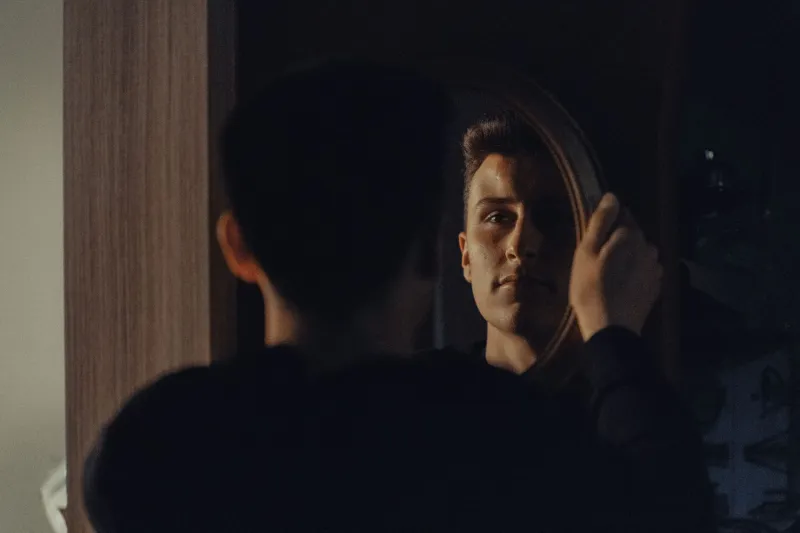
You know the version of yourself you put in the bio. The one with the origin story, the mission, the carefully worded 'why.' You've said it so many times it comes out on autopilot — at networking events, on podcasts, in team all-hands when you need to rally the troops.
But here's the question nobody's asking you: when was the last time you said something — about yourself, about what you want, about what you actually like — that had nothing to do with the company?
Because for a lot of founders, the answer is uncomfortable. And the silence after that question? That's where this article lives.
You Didn't Build a Brand. You Became One.
Personal branding is the gospel of modern entrepreneurship. You need a point of view. A voice. Consistency across platforms. And the advice isn't wrong, exactly — visibility matters, narrative matters, and investors genuinely do invest in people as much as products.
The problem is that nobody tells you what happens when you get really, really good at it.
When you spend years crafting a public identity — the relentless optimist, the visionary disruptor, the resilient founder who turned failure into fuel — your brain starts to organize around that story. Psychologists call this identity fusion, where the role and the self become indistinguishable. It's the same phenomenon that makes method actors sometimes struggle to leave their characters behind after filming wraps.
Except your shoot never wraps. The founder character is always on.
And over time, the costume starts to feel like skin.
The Warning Signs Are Easy to Miss (Until They're Not)
This isn't a dramatic collapse. It's a slow erosion. Here's what it tends to look like:
You can't answer 'what do you enjoy?' without mentioning work. Someone asks what you do for fun and you start talking about a problem you're solving. Not because you're bragging — because nothing else came to mind.
Your opinions feel borrowed. You notice yourself defaulting to whatever position plays best in the room. With investors, you're pragmatic. With your team, you're inspiring. With press, you're quotable. But alone, in a quiet moment, you're not entirely sure what you actually think.
You feel like a fraud in non-founder contexts. At a family gathering, an old friend's birthday, or a casual Saturday with no agenda, something feels off. Not imposter syndrome about your company — something stranger. Like you don't quite know how to be a person in a room that isn't about the startup.
Your past self feels like a stranger. You look at photos from before the company, or remember hobbies and interests you used to have, and it feels like you're looking at someone else's life. Not with sadness, necessarily. Just distance.
Why Founders Are Especially Vulnerable to This
This isn't a character flaw. It's structural.
Founders are asked, constantly, to perform certainty and conviction. Your team needs to believe in you. Your investors need to trust you. The market needs to understand you. Every interaction carries a low hum of pressure to be the founder — coherent, confident, on-brand.
And when you're in that mode for long enough, the performance starts to precede the person. You stop checking in with what you actually feel before figuring out what you're supposed to project.
There's also the identity investment problem. You've tied so much — financially, socially, emotionally — to this company that separating yourself from it feels dangerous. Psychologically, the self-concept and the startup become fused as a kind of protection. If the company succeeds, you succeed. If it fails, you fail. The merger feels rational, even necessary.
It's not. But it makes sense that it happened.
How to Find Out If You're Still In There
The good news is that identity isn't destroyed by overuse. It gets buried. And you can dig.
Start with the pre-startup inventory. Grab a notebook — not your productivity app, an actual notebook — and write down things you used to care about before the company existed. Music you loved. Places you wanted to go. Things you believed that had nothing to do with markets or metrics. Don't judge what comes up. Just notice.
Try the 'nobody's watching' test. On a day off with zero obligations, no Slack, no email, what do you actually do? Not what you think you should do to decompress. What do you genuinely gravitate toward? The answer is data about who you are when the persona gets a day off.
Have a conversation where you're not the founder. Call an old friend who knew you before all of this and ask them what you used to be like. Listen without defending or updating them. Let their memory of you be a mirror.
Notice when you're performing versus responding. In real-time, start catching the moments where you reach for the founder script instead of an honest reaction. You don't have to change what you say immediately. Just notice the gap between the script and whatever was underneath it.
Protecting a Self That Exists Outside the Startup
This isn't about logging off more or taking better vacations — though neither of those things hurts. It's about deliberately protecting a part of your identity that your company has no claim on.
That might mean keeping one friendship that existed before the startup and actively refusing to let it become a networking relationship. It might mean pursuing something — a hobby, a creative project, a physical practice — with zero intention of turning it into content or a lesson about leadership.
It almost certainly means getting honest, in therapy or in a journal or with someone you trust, about which of your current beliefs and preferences are genuinely yours and which ones you adopted because they served the narrative.
The goal isn't to burn the founder persona down. It's to make sure there's someone living behind it.
You Were a Person Before the Cap Table
Here's the thing about identity: it doesn't disappear. It just gets quieter when you stop feeding it.
The person you were before you wrote the first line of your pitch deck is still in there. They have opinions, memories, fears, and desires that have nothing to do with your ARR or your churn rate. And that person is not a liability to your company — they're the reason your company has any soul at all.
The most sustainable version of you as a founder isn't the one who is 100% the founder, 100% of the time. It's the one who can take the persona off, set it on a chair, and still know who's in the room.
So. Who's in the room?