Asking for Help Isn't a White Flag — It's a Power Move

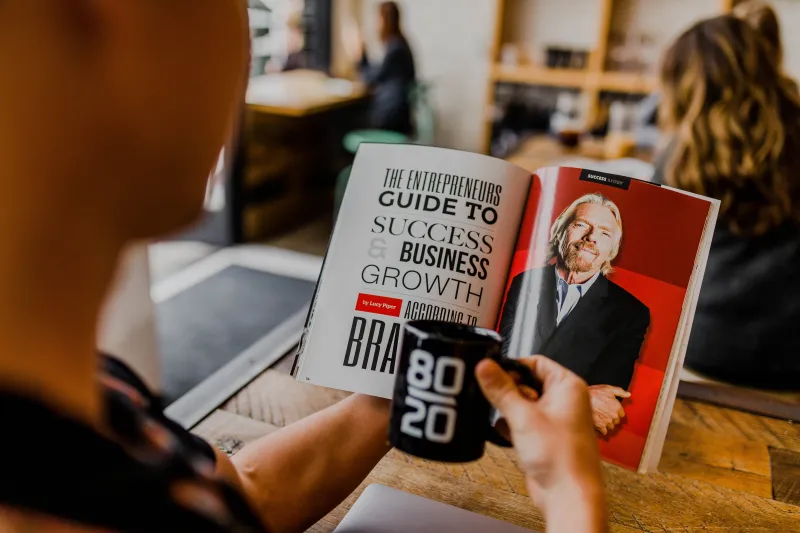
Photo: NickLubushko, CC BY-SA 4.0, via Wikimedia Commons
There's a specific kind of silence that happens when a therapist asks a founder, "Have you ever considered talking to someone about this?"
It's not the silence of someone thinking. It's the silence of someone recalculating. Running the numbers on what it would mean about them if the answer were yes.
Founders are wired for self-sufficiency. That wiring isn't a character flaw — it's practically a job requirement. You launched something from nothing. You convinced people to believe in an idea that lived entirely in your head. You've outworked doubt, outmaneuvered setbacks, and outrun failure more times than you can count. That kind of track record doesn't exactly prime you to walk into a therapist's office and say, I need help.
But here's the catch-22 nobody talks about in founder communities: the very mindset that built your company may be the one quietly dismantling you.
The Myth That Asking for Help Means You're Losing
Startup culture has a complicated relationship with vulnerability. On one hand, you've got the conference circuit full of people doing emotional TED Talks about their lowest moments — conveniently framed as origin stories for their eventual triumph. On the other hand, the day-to-day reality of founder culture still rewards stoicism, celebrates overwork, and treats burnout like a badge of seniority.
The message is subtle but consistent: struggle is okay to talk about after you've made it. In the meantime, keep your head down and push through.
So when you're in the thick of it — when the anxiety is real, the isolation is heavy, and the mental load feels unsurvivable — reaching out for support doesn't feel like self-care. It feels like tapping out. Like admitting the story doesn't have a good ending.
This is the myth. And it's costing founders more than they realize.
What "Strength" Actually Looks Like at the Top
Here's something worth sitting with: the founders who've built the most durable companies aren't the ones who suffered in silence the longest. They're the ones who figured out, often the hard way, that sustainable performance requires active maintenance.
Think about how seriously high-performing founders treat their physical health — sleep optimization, nutrition, workout routines. There's zero stigma attached to hiring a personal trainer or working with a nutritionist. Nobody reads that as weakness. Everyone reads it as someone who understands that output is tied to input.
Mental health works the same way. Therapy, coaching, and psychological support aren't remedies for broken people. They're tools for people who are serious about performing at a high level over a long period of time. The founder who works with a therapist isn't admitting they can't handle the pressure. They're building the internal infrastructure to handle more of it, more sustainably.
That reframe isn't just feel-good spin. It's operationally accurate.
Why Founders Are Especially Resistant (and Especially at Risk)
The founder experience is genuinely unusual. Most people in your life — your team, your investors, your family — have a stake in your confidence. Nobody wants to hear that the person steering the ship is struggling. So you learn to perform stability even when you don't feel it. You get really good at the face.
Over time, that performance becomes its own trap. You've convinced everyone around you that you're fine, which means there's no opening to stop being fine. The mask starts to feel like your actual face.
This is why founders often arrive at a breaking point that looks sudden from the outside but has been building for years. The isolation isn't incidental — it's structural. It's baked into the role.
And yet, the standard advice is still find a mentor, join a peer group, build your network. All of which is useful. None of which touches the interior work that actually needs to happen.
The Competitive Advantage Nobody's Pitching
Let's talk about this in language that might land differently: self-awareness is a competitive moat.
Founders who understand their own psychological patterns — their triggers, their blind spots, the specific flavors of fear that drive their worst decisions — make better calls. They're less reactive. They recover faster from setbacks. They communicate more clearly under pressure. They build teams that don't burn out trying to manage their founder's unprocessed anxiety.
Therapy and coaching aren't just about feeling better. They generate information — about how you operate, what you're optimizing for, where your defaults are costing you. That information is genuinely useful in the boardroom, in a co-founder conflict, in a hiring decision, in the way you talk to yourself at 2am when the numbers aren't where they need to be.
The founder who does this work isn't weaker than the one who white-knuckles it alone. They're operating with better data.
Rewriting the Story You Tell About Asking for Help
If you've been holding off on getting support because some part of you reads it as surrender, it might be worth asking: surrender to what, exactly?
To the idea that you should be capable of handling everything alone? That's not a standard you'd hold your team to. You hire people specifically because no one person can do all of it well.
To the fear that needing support means something is wrong with you? Building a company is one of the most psychologically demanding things a person can do. Needing support isn't a symptom of weakness. It's a response to an objectively hard situation.
To the worry about what other people will think? The founders who are most open about working with therapists and coaches are, almost universally, the ones who other founders quietly respect the most. Because everyone in the room is struggling. The ones who admit it are just the ones being honest.
The First Step Is Smaller Than You Think
You don't have to overhaul your entire relationship with vulnerability overnight. You don't have to post about your therapy journey on LinkedIn or make it part of your founder brand.
You just have to be willing to try one conversation. With a therapist, a coach, a trusted peer — someone who isn't invested in your performance and doesn't need you to be okay.
That conversation won't make you weaker. It won't undermine your credibility or signal to your team that the wheels are coming off.
What it might do is give you back access to yourself — the version of you that isn't running on adrenaline and avoidance, the one that actually makes the decisions you're proud of later.
That founder is still in there. They just need a little room to breathe.
And asking for help? That's how you make the room.