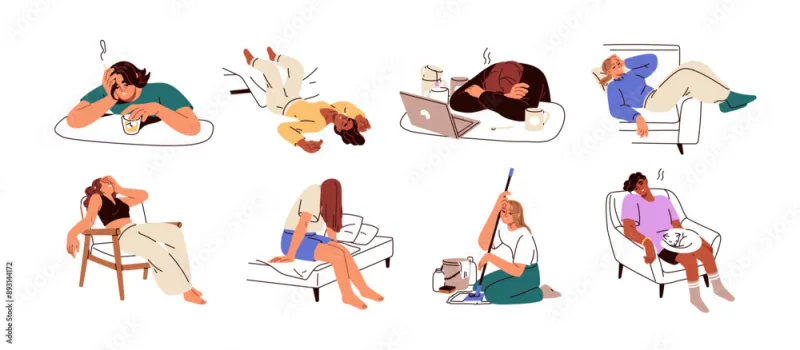
You Closed the Laptop. Your Brain Didn't Get the Memo.
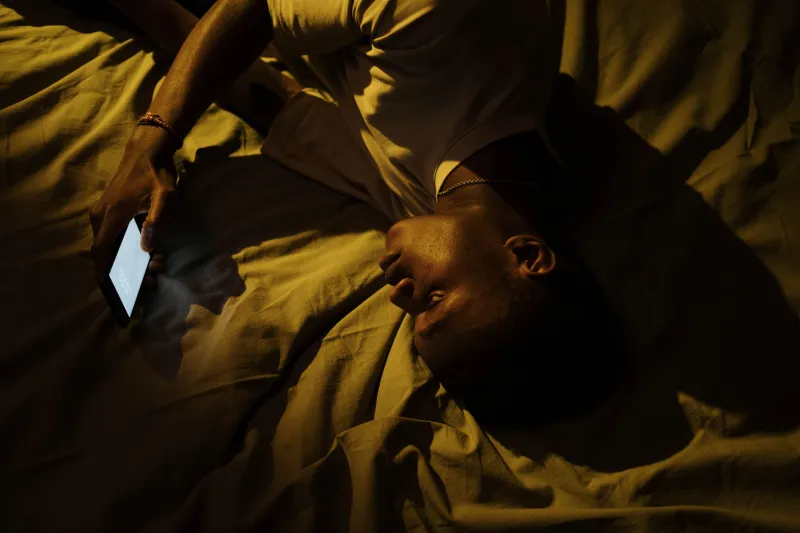
It's 11 PM. The Slack notifications have slowed to a trickle, there's genuinely nothing on fire, and yet here you are — phone in hand, refreshing your inbox for the fourth time in twenty minutes. Not because you expect anything. Not because there's a deadline breathing down your neck. Just... because.
If you've ever tried to explain this to a non-founder, you've probably watched their eyes glaze over. Just put the phone down. Sure. Great advice. Phenomenal. You'll get right on that.
The truth is, what's happening at 11 PM in your kitchen isn't really about email. It's about a nervous system that has been so thoroughly trained to stay on guard that it literally doesn't know what off looks like anymore.
The Inbox That Lives in Your Head
Here's something worth sitting with: most of the time, when founders compulsively check their messages after hours, they already know there's nothing there. It's not optimism driving the behavior — it's anxiety doing a costume change.
Neuroscientists have a term for this pattern: hypervigilance. It's the same mechanism that kept your ancestors scanning the tree line for predators. Your brain learned, somewhere along the way, that not checking is dangerous. That missing a message, a metric shift, a customer complaint — even for a few hours — carries real consequences. And for a while, that was probably true.
The problem is, your brain is terrible at updating its threat assessments. Once it decides that constant monitoring equals survival, it holds onto that equation long after the actual risk has changed. So even on a quiet Tuesday night when your team is asleep and your investors aren't emailing, your nervous system is still at the window with binoculars.
The phantom inbox isn't about the messages. It's about the anxiety that needs something to latch onto.
Why 'Nothing to Do' Feels Worse Than Chaos
This is the part that trips founders up the most. You'd think an empty inbox would feel like relief. Instead, it often feels vaguely threatening. Like you're missing something. Like the quiet is suspicious.
That feeling has a name too: it's called anticipatory anxiety, and it's sneaky. When there's actual chaos — a launch going sideways, a funding call that went cold, a key hire who just put in their notice — your brain has a job. It's problem-solving. It's useful. It feels, in a weird way, right.
But when things are calm? Your brain starts generating hypothetical fires to solve. What if something breaks overnight? What if a competitor just made a move and you won't know until morning? What if, what if, what if.
The checking behavior isn't irrational from your nervous system's perspective. It's an attempt to resolve uncertainty. Every time you pick up the phone and confirm that yes, nothing terrible has happened in the last twelve minutes, you get a tiny hit of relief. And that relief is just reinforcing enough to make you do it again.
You've accidentally trained yourself into a compulsion loop, and the loop doesn't care that it's almost midnight.
The Identity Problem Underneath It All
There's another layer here that doesn't get talked about enough. For a lot of founders, being on isn't just a habit — it's an identity.
When you're always available, always monitoring, always ready to respond, that vigilance becomes part of how you see yourself. You're the person who never misses anything. The one who caught that bug before it became a crisis. The one who responded to that investor email at 11:47 PM and closed the round.
So when you try to actually disengage, it doesn't just feel uncomfortable — it feels like you're abandoning the version of yourself that made the company work. Putting the phone down starts to feel like a character flaw instead of a healthy boundary.
This is where therapy-speak actually earns its keep: you've fused your worth with your availability. And that fusion is quietly destroying your capacity to rest, recover, and show up as anything other than a walking stress response.
Reframing the Check: Practical Ways to Break the Loop
None of this is fixed by willpower alone. You can't white-knuckle your way out of a neurological habit. But you can interrupt it with intention, and over time, that interruption becomes its own new pattern.
Name the feeling, not the action. Before you pick up the phone, pause for three seconds and ask: What am I actually feeling right now? Anxious? Restless? Bored? Naming the emotion starts to separate it from the automatic behavior. You're not reaching for the phone because there's something to check — you're reaching for it because sitting with uncertainty feels intolerable.
Create a closing ritual that means something. The problem with just saying "I'll stop checking at 9 PM" is that your brain doesn't have anything to replace the behavior with. A deliberate end-of-day ritual — even something as simple as writing down your three most important tasks for tomorrow, closing every browser tab, and saying out loud "I'm done for today" — gives your nervous system a real signal that the shift is over. It sounds a little silly. It works anyway.
Scheduled worry windows actually help. This comes from cognitive behavioral therapy, and it's counterintuitive: instead of trying to stop anxious thoughts, you give them a designated time slot. Tell yourself you're allowed to think about work worries between 8 and 8:15 AM. When the phantom anxiety shows up at 11 PM, you're not suppressing it — you're deferring it. That distinction matters to your brain.
Get honest about what "missing something" has actually cost you. Most founders, when they think carefully, realize that the overnight email they didn't see until morning almost never changed an outcome. The urgency is manufactured. Doing a real audit of what late-night checking has actually prevented versus what rest has actually enabled is a useful exercise in recalibrating the threat assessment your brain is running.
The Real Cost of Staying Tethered
Here's what the compulsive checking is actually costing you — and it's not the sleep alone, though that's real enough. It's the erosion of your ability to be present anywhere. When you're technically at dinner but mentally refreshing your metrics, you're not recovering. You're not connecting. You're not doing anything that refills the tank.
Founders who can't disengage don't just burn out faster. They also make worse decisions, because exhausted, hypervigilant brains are not creative brains. The insight that unlocks your next move is far more likely to show up after a real night off than after the fourteenth inbox check of the evening.
Your company needs a lot of things from you. But it needs a functioning, rested, clear-headed version of you more than it needs you to confirm at 11:47 PM that yes, the inbox is still empty.
Close the tab. The emails will be there in the morning. And honestly? So will you — which is the whole point.